


The story of Miyamoto Musashi is a narrative where war, philosophy, and art converge, shaping one of the most fascinating figures in Japanese tradition. Born in 1584 in Harima Province, his life unfolded during a time of profound transformation: the twilight of the turbulent Sengoku period and the rise of the political order imposed by the Tokugawa Shogunate. This context, marked by constant warfare followed by a quest for stability, molded the character of a man destined to transcend his era.
The Path of the Sword
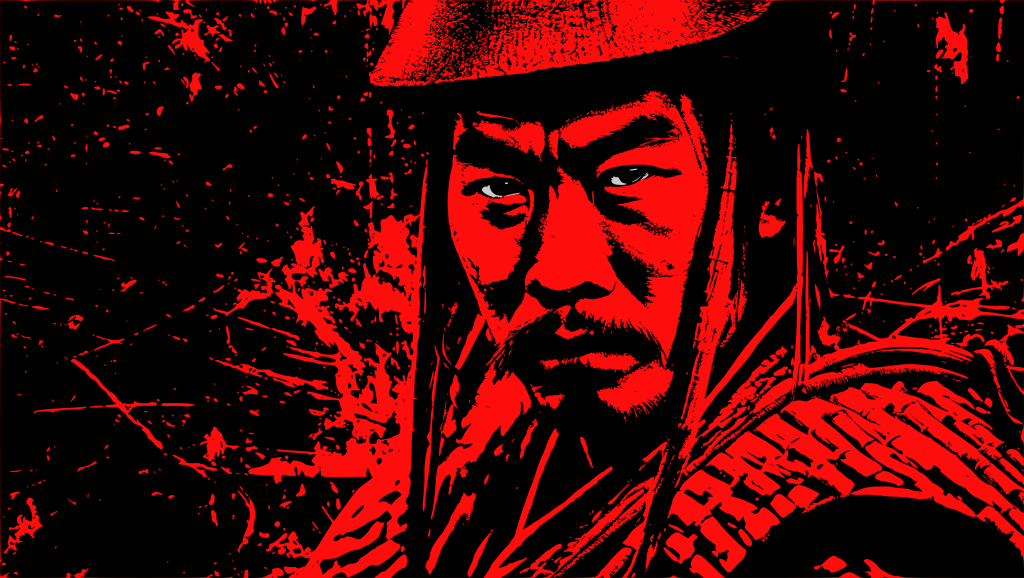
From a very young age, Musashi was bound to the art of combat. It is said he fought his first duel at age 13, defeating an adult samurai—a feat that foreshadowed an extraordinary path. Throughout his life, he engaged in over sixty duels, remaining undefeated and cementing a legendary reputation.
His unique style, known as Niten Ichi-ryū (the technique of “Two Heavens as One”), broke with tradition by simultaneously employing both the katana and the wakizashi. This reflected an innovative approach to combat based on adaptability and a total perception of one’s surroundings.
His most famous encounter took place in 1612 against Sasaki Kojirō on Ganryū-jima Island. History has immortalized this duel not just for its outcome, but for its psychological depth: Musashi arrived deliberately late to unsettle his opponent and used a bokken (wooden sword) carved from a boat oar. In doing so, he achieved more than a physical victory; he demonstrated a profound mastery of the adversary’s psychology and the art of strategy.
The Strategy of the Spirit
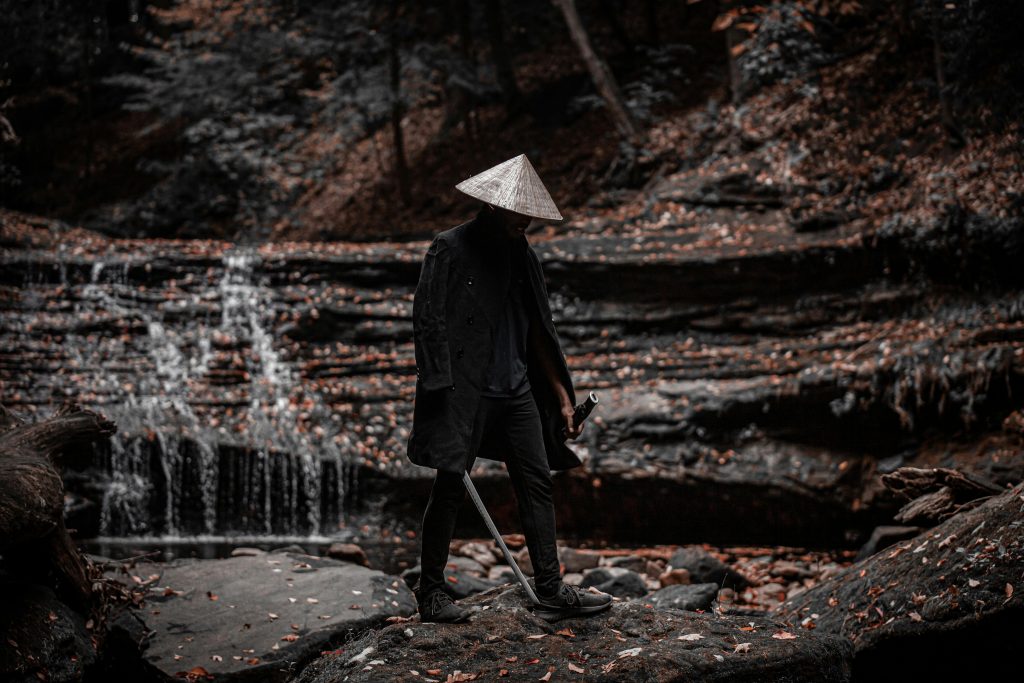
To view Musashi solely as a warrior would be incomplete. His philosophy was immortalized in The Book of Five Rings (Go Rin no Sho), written in 1645 shortly before his death while in retreat at the Reigandō cave. Structured into five sections—Earth, Water, Fire, Wind, and Void—the work develops a strategic philosophy that transcends the battlefield. Each “book” represents a level of understanding, ranging from practical fundamentals to pure intuition, where knowledge becomes almost instinctive.
Musashi understood that true mastery lay not in defeating the enemy, but in mastering oneself. His thought reflects the influence of Zen Buddhism and Confucianism, promoting discipline, introspection, and inner balance. Consequently, his legacy has been reinterpreted today across various fields, including:
- Martial Arts
- Leadership and Management
- Business Strategy
The Warrior-Artist
In the final stage of his life, Musashi moved away from duels to dedicate himself to contemplation and art. He became an accomplished painter and calligrapher, influenced by the sumi-e (ink wash) aesthetic, characterized by sobriety and expressive depth. Works such as The Shrike on a Dead Branch or his depictions of Daruma reveal a sensitivity that mirrors his philosophy: the search for essence through simplicity.
This evolution reveals a man who, after a life defined by confrontation, found transcendence in artistic creation. Musashi embodies the ideal of the warrior-artist—a figure who integrates strength with sensitivity, and action with contemplation.
A Lasting Legacy
Ultimately, the story of Miyamoto Musashi is that of an individual who transformed combat into a path toward knowledge. His legacy transcends military history to become a reflection on the human condition: the tension between discipline and freedom, strategy and spontaneity, the sword and the brush. More than four centuries after his birth, he continues to inspire those who seek to understand that the true victory is not the conquest of others, but the conquest of oneself.